
What is atrial fibrillation?
Atrial fibrillation (AFib) is a common abnormal heart rhythm where the upper chambers of the heart (the atria) beat in an irregular and often fast manner. This can make the heart less effective at pumping blood.[1-2][5]
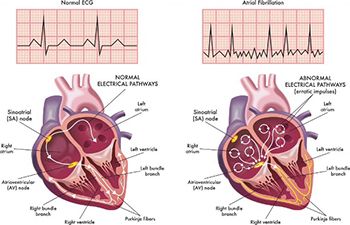
Atrial fibrillation is a type of irregular heartbeat, called an arrhythmia, that can lead to a number of serious heart complications. Normally, the contraction and relaxation of the heart muscle happens in a steady, regular rhythm to keep a constant volume of blood flowing through the body. In atrial fibrillation, the upper chambers of the heart, called the atria, do not beat in sync with the lower chambers of the heart, called the ventricles. When the heart beats irregularly, some blood is left behind in the atria. When blood is stagnant, it can form clots that can be transported through the circulation to the rest of the body. Most notably, a blood clot can travel to the brain and cause a stroke. The irregular heartbeat of atrial fibrillation can be persistent or episodic. People with atrial fibrillation may have no symptoms at all, or they may feel a sensation of a rapid heartbeat, a pounding heart, light-headedness, dizziness, or shortness of breath.
Resources:
- What is Atrial Fibrillation? | American Heart Association
- Atrial fibrillation - Symptoms and causes - Mayo Clinic
- Continuing Education Module: Atrial Fibrillation - StatPearls - NCBI Bookshelf
How common is atrial fibrillation?
Atrial fibrillation is the most common cardiac arrhythmia. The number of people diagnosed with atrial fibrillation is increasing and it is estimated that the prevalence will double or triple by 2050. Some identified risk factors for developing this condition include older age, male sex, uncontrolled high blood pressure, heart disease, family history, alcohol use, sleep apnea, and thyroid disease. Left untreated, atrial fibrillation carries a high risk of stroke and heart failure.
Key statistics [references below]:
- Current prevalence: Over 10.55 million adults in the U.S. have been diagnosed with AFib. This is a significant increase from previous estimates, which were 3.33 million to 7.5 million in 2020.
- Projected prevalence: The number of people with AFib is projected to increase to over 12 million by 2030.
- Prevalence by demographics:
- AFib is more common in older adults.
- It is more prevalent in men than in women, though the prevalence in men remains higher even after accounting for cardiovascular disease.
- The prevalence is higher in individuals of European descent compared to other racial and ethnic groups.
References:
Ryder KM, Benjamin EJ. Epidemiology and significance of atrial fibrillation. Am J Cardiol. 1999 Nov 4;84(9A):131R-138R. doi: 10.1016/s0002-9149(99)00713-4. PMID: 10568672.
Noubiap, J, Tang, J, Teraoka, J. et al. Minimum National Prevalence of Diagnosed Atrial Fibrillation Inferred From California Acute Care Facilities. JACC. 2024 Oct, 84 (16) 1501–1508. https://doi.org/10.1016/j.jacc.2024.07.014
Lakshminarayan K, Anderson DC, Herzog CA, Qureshi AI. Clinical epidemiology of atrial fibrillation and related cerebrovascular events in the United States. Neurologist. 2008 May;14(3):143-50. doi: 10.1097/NRL.0b013e31815cffae. PMID: 18469671; PMCID: PMC5619693.
Why is it important to care about atrial fibrillation?
AFib is important because it can lead to serious health problems. People with AFib have a higher risk of stroke, heart failure, and even death. Stroke happens because AFib can cause blood clots to form in the heart, which can travel to the brain.[2][4][7][10]
Resources:
- Why Atrial Fibrillation Matters | American Heart Association
- CHA₂DS₂-VASc Score for Atrial Fibrillation Stroke Risk
The CHA2DS2-VASc Score for for Atrial Fibrillation Stroke Risk calculates stroke risk for patients with atrial fibrillation.
How is atrial fibrillation harmful to the body?
The abnormal heart rhythm of atrial fibrillation can cause blood to become stagnant in the heat chambers. That stagnant blood can form clots that can be transported through the circulation to the brain and cause a stroke. Over time, atrial fibrillation can cause wear and tear on the heart and ultimately lead to heart failure. Heart failure is when the heart is no longer able to adequately pump blood to supply the rest of the body. Additionally, those with atrial fibrillation generally have multiple hospital admissions, are on a number of medications, and overall have a poorer quality of life. For those that have an atrial fibrillation-related stroke, the mortality and morbidity are even higher.
How can I recognize if I have atrial fibrillation?
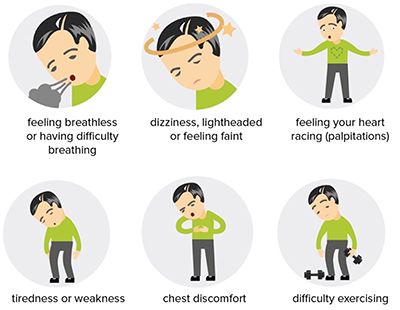
Some people with AFib feel symptoms such as:
- A fast or irregular heartbeat (palpitations)
- Feeling tired or weak
- Shortness of breath
- Chest pain or discomfort
- Dizziness or feeling faint
- Difficulty exercising
However, many people do not notice any symptoms. AFib is sometimes found during a routine check-up by listening to the heart or on a routine EKG.[2][5][10]
How is atrial fibrillation treated?
Treatment for AFib uses medications, procedures, AND lifestyle change to focus on 3 main aims.
Preventing stroke: Most people with AFib need a blood thinner (anticoagulant) to lower the risk of blood clots and stroke. Common medicines include apixaban (Eliquis), rivaroxaban (Xarelto), and warfarin. The choice depends on your health and other conditions. These medicines should be taken exactly as prescribed.[1-2][4][6-7][10-11]
Controlling heart rate or rhythm: Medicines like beta-blockers (metoprolol), calcium channel blockers (diltiazem, verapamil), or sometimes antiarrhythmic drugs help slow the heart or keep it in a regular rhythm. In some cases, procedures like electrical cardioversion or catheter ablation may be recommended, especially if symptoms continue or if there is heart failure.[1-3][5][7][10][12]
Treating underlying causes: Doctors may check for and treat things like high blood pressure, thyroid problems, or sleep apnea.[1-2][5][7][10]
Resources:
How Are Atrial Fibrillation Treatment Options Determined? | American Heart Association
Questions to ask your doctor:
Take this sheet with you to your appointment to know what to discuss with your health care team:
AFib: Partnering in Your Treatment
How can a healthy lifestyle prevent and treat atrial fibrillation?
Making healthy lifestyle choices can lower the risk of atrial fibrillation, help with management and treatment and help prevent serious complications. They also improve overall health and quality of life. All six pillars of lifestyle medicine can be applied to atrial fibrillation.
- Diet
- Exercise
- Sleep
- Stress Management
- Substance Use Reduction
- Social Connectedness
Diet
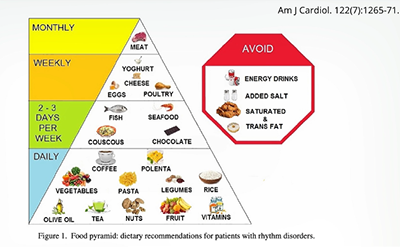
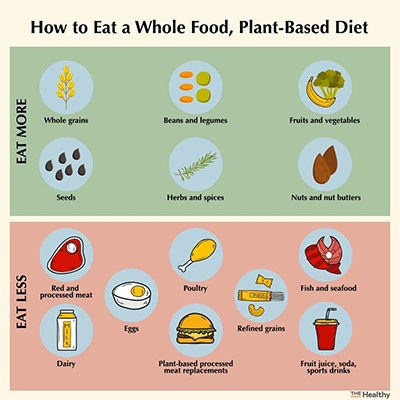
A diverse whole-food plant-predominant diet is the best for your heart.
The core food groups for an atrial fibrillation diet include vegetables, fruits, whole grains, nuts, and beans. While not plant-based, foods like seafood, dairy, eggs, chicken are best enjoyed a few times a week, while other meats like pork and beef should be consumed once a month. The underlying principle for this diet recommendation is limiting saturated fats and trans fats. This kind of diet is also helpful in mitigating the risk factors for atrial fibrillation like hypertension and obesity. Plant-based diets have been shown to lower blood pressure, aid in weight loss, and overall decrease inflammation in the body.
Watch a video about using diet to treat atrial fibrillation
Losing only 10% of body weight can significantly improve atrial fibrillation. You will find that whole foods have lots of nutrition and "low calorie density." This means that you can eat a large quantity of whole foods, feel full, and still reduce the number of calories you eat in a day allowing you to lose weight and gain strength while not feeling hungry or deprived!

Exercise
We as humans do better when we are active and move a lot. Every organ in your body including your heart improves when you consistently get more exercise. It has been shown time and time again that regular physical activity and exercise has many benefits. It lowers blood pressure and blood sugar, helps control weight, improves mood, boosts energy and promotes better sleep. It can also help to treat diabetes, depression, hypertension and cancer as well as your atrial fibrillation.
Benefits of Exercise for Atrial Fibrillation
- Reduces How Often You Are In AFib: Regular moderate exercise can decrease the frequency and severity of AFib episodes.
- Improves Heart Function: Strengthens the heart, improves blood flow
- Aids in Weight Management
- Boosts Quality of Life: Increases energy levels and ability to perform daily activities.
Safe Exercise Types
- Moderate Aerobic: Brisk walking, swimming, cycling (low impact).
- Flexibility & Balance: Yoga, Pilates.
- Strength Training: Incorporate light resistance training.
- Household Chores: Vigorous chores like vacuuming are also good.
What to Avoid (or Approach with Caution)
- High Intensity: HIIT (High-Intensity Interval Training) and prolonged endurance sports (like marathon running) can increase AFib risk in some individuals.
- High-Risk Activities: Contact sports or activities with a high fall risk if taking blood thinners.
- Overexertion: Pushing too hard can trigger symptoms.
How to Exercise Safely with AFib
- Consult Your Doctor: Get personalized advice before starting or changing your routine.
- Listen to Your Body: Stop if you feel dizzy, faint, or extremely breathless.
- Monitor Intensity: Use the Rate of Perceived Exertion (RPE) scale (you can talk but are slightly breathless). Rate of Perceived Exertion (RPE) Scale
- Warm-up & Cool-down: Essential to gradually prepare and calm your heart.
Key Takeaway
Moderate, consistent exercise is a powerful tool for AFib management, offering significant benefits, but the key is balance and avoiding the extremes of a sedentary lifestyle or excessive training.
Osbak, P. S., Mourier, M., Henriksen, J. H., Kofoed, K. F., & Jensen, G. B. (2012). Effect of physical exercise training on muscle strength and body composition, and their association with functional capacity and quality of life in patients with atrial fibrillation: a randomized controlled trial. Journal of rehabilitation medicine, 44(11), 975–979. https://doi.org/10.2340/16501977-1039
Wang, Y., Wang, Y., & Xu, D. (2024). Effects of different exercise methods and intensities on the incidence and prognosis of atrial fibrillation. Trends in cardiovascular medicine, S1050-1738(24)00002-1. Advance online publication. https://doi.org/10.1016/j.tcm.2024.01.002
Lifestyle Medicine: Physical Activity | GW Medical Faculty Associates
For Nonexercisers consider “Exercise Snacks"
These "Snacks" are something you DO not something you eat. Research published in Nature Medicine shows that as few as 2-3 short bouts of vigorous intermittent lifestyle activity [VILPA] were associated with 40-50% lower all cause, cardiovascular and cancer mortality. Activities like running across the street or climbing stairs lasting only 3-4 minutes a day can provide this benefit. Including regular bursts of high-intensity, heart rate raising movement into your daily routine will boost your everyday health. So take the stairs, carry your groceries and run after your dog to improve your health!
You can also use AI such as ChatGPT to help you come up with ideas or workout plans that you can adapt to your day-to-day routine.
Try prompts like the following:
"I would like to make a workout plan. I would like to spend 30 minutes a few times a week doing exercises at home. I have resistance bands and light dumbbells. I would like a quick, easy full-body workout routine that I can do in my spare time. Walk me through each exercise and how to perform them as a beginner."
Sleep
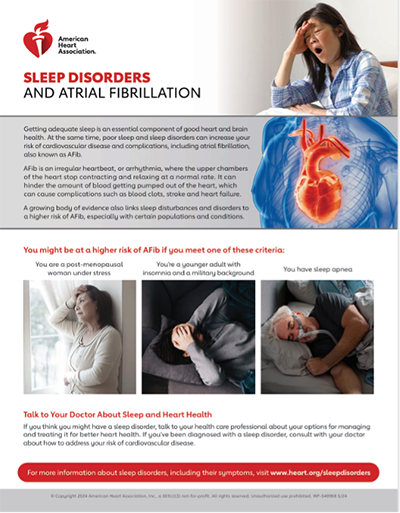
Poor sleep increases Afib risk and leads to longer episodes.
Good quality sleep is an important part of any healthy lifestyle. For atrial fibrillation, poor quality of sleep and shorter duration of sleep have both been identified as risk factors for developing the condition. Greater sleep onset latency, meaning taking a longer time to fall asleep, decreased REM sleep, and frequent lifetime awakenings all negatively impact sleep quality and are important to consider in atrial fibrillation. The association between obstructive sleep apnea (OSA) and atrial fibrillation has been well documented. People with atrial fibrillation are much more likely to have OSA than the general population. Conversely, having atrial fibrillation can predispose you to developing OSA. Aim for 7-9 hours of sleep so you feel rested the next day.
Gami, A. S., Pressman, G., Caples, S. M., Kanagala, R., Gard, J. J., Davison, D. E., Malouf, J. F., Ammash, N. M., Friedman, P. A., & Somers, V. K. (2004). Association of atrial fibrillation and obstructive sleep apnea. Circulation, 110(4), 364–367. https://doi.org/10.1161/01.CIR.0000136587.68725.8E
Chokesuwattanaskul, R., Thongprayoon, C., Sharma, K., Congrete, S., Tanawuttiwat, T., & Cheungpasitporn, W. (2018). Associations of sleep quality with incident atrial fibrillation: a meta-analysis. Internal medicine journal, 48(8), 964–972. https://doi.org/10.1111/imj.13764
Christensen, M. A., Dixit, S., Dewland, T. A., Whitman, I. R., Nah, G., Vittinghoff, E., Mukamal, K. J., Redline, S., Robbins, J. A., Newman, A. B., Patel, S. R., Magnani, J. W., Psaty, B. M., Olgin, J. E., Pletcher, M. J., Heckbert, S. R., & Marcus, G. M. (2018). Sleep characteristics that predict atrial fibrillation. Heart rhythm, 15(9), 1289–1295. https://doi.org/10.1016/j.hrthm.2018.05.008
GW Lifestyle Medicine Sleep Resources
Substance Use Reduction
Alcohol
For alcohol, chronic moderate to heavy drinking is associated with this disease. This can be defined as an average of >3 drinks per day for men and >2 drinks per day for women. Additionally, one study suggested that liquor consumption instead of beer or wine has a stronger effect on atrial fibrillation risk.
Tobacco, cannabis, cocaine, methamphetamines and opiates have also all been identified as risk factors for atrial fibrillation. Importantly, whether the substances are used continuously or episodically, the increased risk for developing atrial fibrillation is largely similar. Using multiple substances further increases the risk.
Caffeine–not a risk factor
Although caffeine is a stimulant, there is not sufficient evidence to say that caffeine is a risk factor for atrial fibrillation. In fact, a few studies have shown that moderate caffeine intake (around 285 mg/day) is protective against developing atrial fibrillation. Turagam, M. K., Velagapudi, P., Kocheril, A. G., & Alpert, M. A. (2015). Commonly consumed beverages in daily life: do they cause atrial fibrillation?. Clinical cardiology, 38(5), 317–322. https://doi.org/10.1002/clc.22385
Anthony L Lin, Gregory Nah, Janet J Tang, Eric Vittinghoff, Thomas A Dewland, Gregory M Marcus, Cannabis, cocaine, methamphetamine, and opiates increase the risk of incident atrial fibrillation, European Heart Journal, Volume 43, Issue 47, 14 December 2022, Pages 4933–4942, https://doi.org/10.1093/eurheartj/ehac558
Stress Reduction and Social Connectedness/Healthy Relationships/Avoidance of Social Isolation:
Stress can trigger episodes of atrial fibrillation and worsen the condition. Job strain and stressful life events are specific types of stress that have been documented risk factors for developing atrial fibrillation. Moreover, job strain specifically has a dose-related effect where the more years of job strain equals more risk of atrial fibrillation.
One way to mitigate stress is to focus on building healthy relationships with others and avoid social isolation. Additionally, talking to therapists or counselors, exercising, and mindfulness activities can be helpful outlets. It is nearly impossible to live a completely stress-free life, but incorporating stress-relieving activities can help.
Fransson, E. I., Stadin, M., Nordin, M., Malm, D., Knutsson, A., Alfredsson, L., & Westerholm, P. J. (2015). The Association between Job Strain and Atrial Fibrillation: Results from the Swedish WOLF Study. BioMed research international, 2015, 371905. https://doi.org/10.1155/2015/371905
Zhao, S. X., Tindle, H. A., Larson, J. C., Woods, N. F., Crawford, M. H., Hoover, V., Salmoirago-Blotcher, E., Shadyab, A. H., Stefanick, M. L., & Perez, M. V. (2023). Association Between Insomnia, Stress Events, and Other Psychosocial Factors and Incident Atrial Fibrillation in Postmenopausal Women: Insights From the Women's Health Initiative. Journal of the American Heart Association, 12(17), e030030. https://doi.org/10.1161/JAHA.123.030030
Optimally Healthy Lifestyle for Atrial Fibrillation:
Here is a summary of the lifestyle recommendations that are important for the management of atrial fibrillation.
- Following a plant-based diet:
- Breakfast: oatmeal made with coconut milk topped with berries, coconut, and walnuts or tofu and vegetable frittata
- Lunch: large salad topped with fresh vegetables, chickpeas, avocado, pumpkin seeds, and goat cheese or meatless chili
- Dinner: butternut squash curry or black bean burgers served on a large salad with sliced avocado
- Getting 150 minutes of moderate-intensity continuous training (MICT) per week for exercise:
- Going for a 30-minute jog after work
- Bicycling along a trail for 60 minutes
- Playing pickleball in a recreational league a few times a week
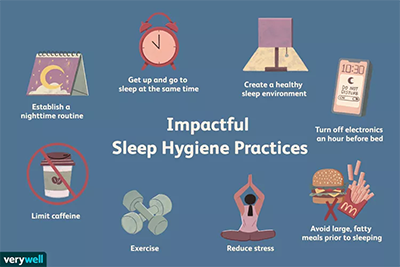
- Aim for 7-9 hours of quality sleep per night by practicing good sleep hygiene:
- Keep a consistent sleep schedule by going to bed and waking up at similar times every day
- Have a daily sleep routine 30-60 minutes before bedtime to ready the body for sleep
- Play soothing music
- Take a warm bath or shower
- Gentle stretches
- Limit blue light emitted from electronic devices close to bedtime
- Avoid alcohol, nicotine, caffeine, and eating large meals before bed
- Limit alcohol to 2 beverages per day for women and 3 beverages per day for men. Less is better and none is best.
- Engage in stress-relieving activities to keep stress levels at minimum
- Have weekly virtual or in-person meetings with loved ones
- Maintain a healthy work-life balance
- Focus on mindfulness activities
- Exercise regularly
When to Call 911:
Sudden confusion, Unusual or severe headache, Chest pain, Trouble breathing, Uncontrolled bleeding
When to call your healthcare provider:
Call your healthcare provider right away if you have: Shortness of breath, Feel sick, weak, faint or dizzy, A change in the usual regularity of your heartbeat, Increased fatigue, A fever of 100.4°F or 38°C or higher, or if your symptoms of AFib are new or are getting worse
References:
- Atrial Fibrillation.
Michaud GF, Stevenson WG. The New England Journal of Medicine. 2021;384(4):353-361. doi:10.1056/NEJMcp2023658. - Atrial Fibrillation: A Review.
Ko D, Chung MK, Evans PT, Benjamin EJ, Helm RH. JAMA. 2025;333(4):329-342. doi:10.1001/jama.2024.22451. - Atrial Fibrillation: Common Questions and Answers About Diagnosis and Treatment.
Holder S, Amin P. American Family Physician. 2024;109(5):398-404. - Atrial Fibrillation and Stroke Prevention: 25 Years of Research at EP Europace Journal.
Lip GYH, Proietti M, Potpara T, et al. Europace : European Pacing, Arrhythmias, and Cardiac Electrophysiology : Journal of the Working Groups on Cardiac Pacing, Arrhythmias, and Cardiac Cellular Electrophysiology of the European Society of Cardiology. 2023;25(9):euad226. doi:10.1093/europace/euad226. - How Would You Manage This Patient With Recent-Onset Atrial Fibrillation? Grand Rounds Discussion From Beth Israel Deaconess Medical Center.
Smetana GW, Gelfand EV, Tung P, Burns RB. Annals of Internal Medicine. 2025;178(2):269-278. doi:10.7326/ANNALS-24-03490. - 2023 ACC/AHA/ACCP/HRS Guideline for the Diagnosis and Management of Atrial Fibrillation: A Report of the American College of Cardiology/American Heart Association Joint Committee on Clinical Practice Guidelines.
Joglar JA, Chung MK, Armbruster AL, et al. Circulation. 2024;149(1):e1-e156. doi:10.1161/CIR.0000000000001193. - 2014 AHA/ACC/HRS Guideline for the Management of Patients With Atrial Fibrillation: A Report of the American College of Cardiology/American Heart Association Task Force on Practice Guidelines and the Heart Rhythm Society.
January CT, Wann LS, Alpert JS, et al. Circulation. 2014;130(23):e199-267. doi:10.1161/CIR.0000000000000041. - FDA Orange Book.
FDA Orange Book - Management of Newly Detected Atrial Fibrillation: A Clinical Practice Guideline From the American Academy of Family Physicians and the American College of Physicians.
Snow V, Weiss KB, LeFevre M, et al. Annals of Internal Medicine. 2003;139(12):1009-17. doi:10.7326/0003-4819-139-12-200312160-00011. - Early or Delayed Cardioversion in Recent-Onset Atrial Fibrillation.
Pluymaekers NAHA, Dudink EAMP, Luermans JGLM, et al. The New England Journal of Medicine. 2019;380(16):1499-1508. doi:10.1056/NEJMoa1900353. - Lifestyle and Risk Factor Modification for Reduction of Atrial Fibrillation: A Scientific Statement From the American Heart Association.
Chung MK, Eckhardt LL, Chen LY, et al. Circulation. 2020;141(16):e750-e772. doi:10.1161/CIR.0000000000000748. - Prevention and Treatment of Atrial Fibrillation via Risk Factor Modification.
O'Keefe EL, Sturgess JE, O'Keefe JH, Gupta S, Lavie CJ. The American Journal of Cardiology. 2021;160:46-52. doi:10.1016/j.amjcard.2021.08.042.